
…and that is where most homeowners make their first massive mistake. They assume that a kitchen remodel or a new roof is just a “home project” when, in reality, it is a high-stakes financial maneuver. You sit there staring at a cracked countertop or a leaking ceiling, thinking you can just “make it work” for another year. You can’t.
The math simply doesn’t work that way. Deferred maintenance is a slow leak in your net worth. If you want to actually fix the house, you need a way to pay for it that doesn’t involve draining your entire emergency fund or waiting five years to save up the cash. This is why the conversation around home improvement financing is so loud right now.
You have to decide how you want to borrow. There are two main paths: you can put your house on the line, or you can leave it out of the equation entirely. One is safer for your credit score but puts your roof at risk. The other is faster and keeps your equity private but comes with different strings attached.
Stop Treating Your Mortgage Like a Piggy Bank
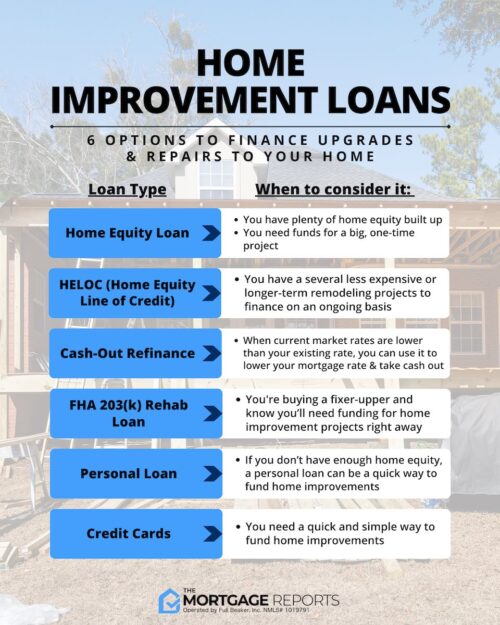
Most people’s first instinct is to look at their equity. They see a high home value and think, “I’m sitting on a goldmine.” They want to tap into that via a Home Equity Line of Credit (HELOC) or a second mortgage. While that works for massive, structural transformations, it is often a headache you don’t need for smaller, urgent fixes.
Using your home as collateral is a heavy lift. If you can’t make the payments on a HELOC, the bank doesn’t just come for your car; they come for the house. You are essentially betting your primary residence on your ability to finish a bathroom remodel on time and under budget. That is a lot of pressure for a new vanity and some tiling.
This is why many smart homeowners are opting for unsecured options instead. An unsecured personal loan is a type of loan where you don’t put your house up as collateral. Because it’s unsecured, you don’t put your house up as collateral, unlike a home equity loan or a home equity line of credit (HELOC) as noted by Finder.
This lack of collateral means the approval process is usually much faster. You aren’t waiting for an appraiser to come out, verify the square footage, and tell you that your basement is actually two inches shorter than the blueprints suggested. You just need a decent credit score and a plan.
The Speed of Unsecured Debt
When you need a new roof because the old one is currently shedding shingles like autumn leaves, you don’t have three months to wait for a bank’s appraisal. Unsecured loans act as a bridge. You get the lump sum, you pay the contractor, and you move on. It keeps your home’s title clear and your stress levels manageable.
The Interest Rate Trade-off
You do pay for that convenience. Since the bank has no house to seize if you stop paying, they will charge you a higher interest rate than they would for a mortgage-backed loan. It is a trade-off between risk and speed. If you are a disciplined borrower, that extra percentage point is a small price to pay for the peace of mind of knowing your home is not on the line.
Picking the Right Tool for the Job
Not every renovation project is created equal. If you are planning to add a whole new wing to your house, you are looking at a massive capital investment. If you are just trying to fix a leaky faucet or upgrade some plumbing, you are looking at a quick fix. Your financing should reflect that reality.
If you are doing a massive overhaul, think gutting the kitchen or adding a bedroom, you might need a larger sum. Some lenders specialize in these bigger, more complex projects. You need to look at whether you want a fixed-rate loan or something that fluctuates. Most home improvement loans are personal loans that are lump-sum, fixed-rate loans that you will repay in monthly installments over a set period of time according to LendingTree.
A fixed rate is your friend if you hate surprises. You know exactly what the check will look like every month until the debt is gone. Variable rates might start lower, but they can jump unexpectedly, turning your “dream kitchen” into a monthly nightmare.
| Loan Type | Collateral | Approval Speed | Best For… |
| :— | :— | :— | :— |
| **Unsecured Personal Loan** | None | Fast (Days) | Repairs, small remodels, emergencies |
| **HELOC** | The House | Slow (Weeks) | Ongoing, multi-stage renovations |
| **Home Equity Loan** | The House | Slow (Weeks) | Large, one-time structural changes |
| **Cash-Out Refinance** | The House | Slow (Months) | Major total home overhauls |
If you need money quickly for smaller projects and emergencies, such as a new roof, upgraded plumbing, or adding a room, a personal expense loan is often the most efficient route as suggested by Navy Federal Credit Union. It is about matching the liquidity to the task.
The Hidden Traps in the Fine Print
Before you sign anything, you need to look past the monthly payment figure. Lenders are masters of making a loan look affordable by stretching the term out to 60 or 72 months. A low monthly payment sounds great until you realize you are paying for that new dishwasher for the next six years.
You also need to watch out for origination fees. Some lenders will take 3% or 5% off the top of your loan before you even see the money. If you borrow $20,000 but only get $19,000 in your bank account, you still owe $20,000. Do the math before you commit.
Are you prepared for the actual cost of labor? This is where most renovation budgets die. People borrow for the materials, the granite, the hardwood, the light fixtures, but they forget that labor often accounts for half the bill. If you borrow $15,000 for a kitchen but the contractor tells you the cabinets alone are $10,000, you are in trouble.
You should always aim for a “buffer” in your financing. If your estimate is $18,000, you should be looking for $22,000. There is always something that goes wrong behind a wall once the contractors start swinging hammers. It is not a matter of “if,” but “when.”
The Importance of Fixed Rates
I have seen too many people get trapped by variable rates. They take a loan for a remodel, think they can handle the payment, and then inflation hits, interest rates rise, and suddenly their monthly payment has jumped by $200. It ruins the budget. Stick to fixed rates whenever you can.
Credit Score Impact
Your credit score is the gatekeeper. If you are hovering just below the threshold for the best rates, it might be worth waiting six months to pay down some credit card debt before you apply. A 50-point difference in your score can save you thousands of dollars over the life of the loan.
Don’t Let Renovations Break You
Financing a home project is a tool, not a lifestyle. It is a way to add value to your asset and improve your daily life. Whether you are planning to renovate or remodel, cover home repairs, make a new addition, or even plan for green energy, you need a strategy as Wells Fargo outlines.
If you use a loan to increase the value of your home, you are essentially moving money from one asset (cash) into another (home equity). This is a sound move, provided the math works. If you spend $50,000 to add a bathroom that only adds $30,000 in appraised value, you haven’t made a smart investment; you’ve just spent money to look fancy.
Always compare your options. Don’t just go to your primary bank because you’ve been there for ten years. Check credit unions, check online lenders, and check local banks. They all have different appetites for risk and different ways of valuing your creditworthiness.
The goal is to finish the project, enjoy the new space, and get back to living your life without a mountain of debt hanging over your head. It takes discipline, but it is the only way to win the game.
The market won’t wait for you to be ready.
For the full picture, it’s worth checking texasloanstoday.com.
Common questions
Can I use a personal loan for home improvements?
Yes, personal loans are unsecured funds that can be used for any purpose, including kitchen remodels, roofing, or landscaping.
Is a personal loan better than a home equity loan for renovations?
Personal loans offer faster approval and no collateral, while home equity loans typically provide lower interest rates but require your home as security.
How much can I borrow for home improvement via a personal loan?
Borrowing limits vary by lender and credit score, but most personal loans offer between $1,000 and $50,000 for home projects.
Will a personal loan for home improvement increase my debt-to-income ratio?
Yes, adding a personal loan increases your total monthly debt obligations, which may impact your ability to secure other credit in the future.
Are there tax benefits to financing home improvements with a personal loan?
Generally, personal loans are not tax-deductible, unlike home equity loans where interest may be deductible if the funds are used to improve the secured property.